
Simeon
Visit WebsiteThe Brief
Overview
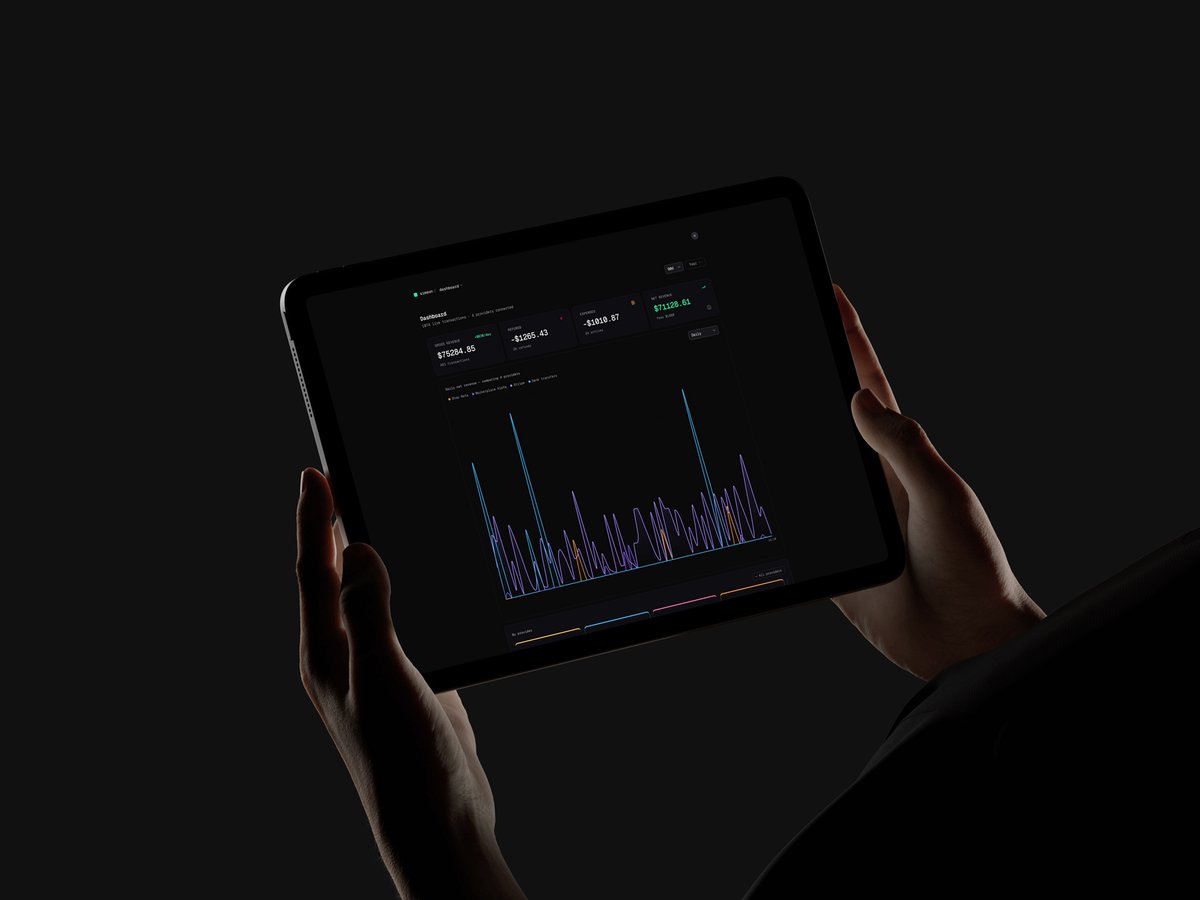
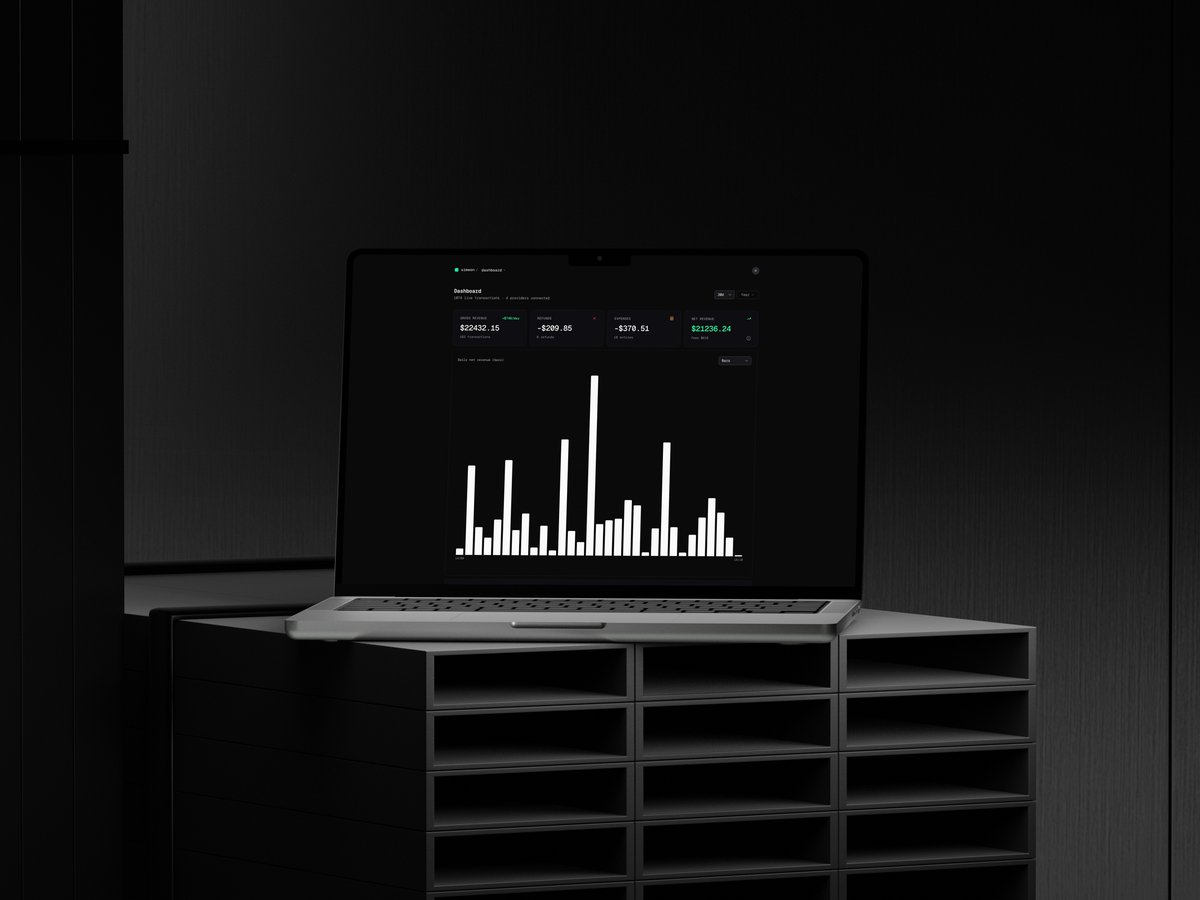
Simeon is an app, that brings every revenue stream of a creator or small business into a single dashboard. It connects to the payment and sales platforms people already use, shows what they actually earn in one currency, and now lets them ask their own AI assistant about it. Designed and built it end to end: product strategy, UX and UI, the full-stack application, the public API and AI connector, the marketing site, the legal and security foundations, and the launch assets.
The Challenge
Creators rarely sell in one place. A typical week involves Stripe, PayPal, Gumroad, Polar, Shopify and a few more, each with its own dashboard, its own currency, its own definition of “revenue” and its own fees. Answering a simple question such as “how much did I make this month?” means opening six tabs and rebuilding the answer in a spreadsheet. The real competitor was not another SaaS. It was the spreadsheet and the habit of guessing. Three problems had to be solved at once: Fragmentation: many providers, many formats, many currencies. Trust: a dashboard that touches financial accounts has to earn trust before it earns usage. Read-only access, clear security and honest numbers were not optional. Complexity: a technical product is easy to over-explain. Every screen and every sentence had to answer one question: what did I make, and where did it come from?
Solution
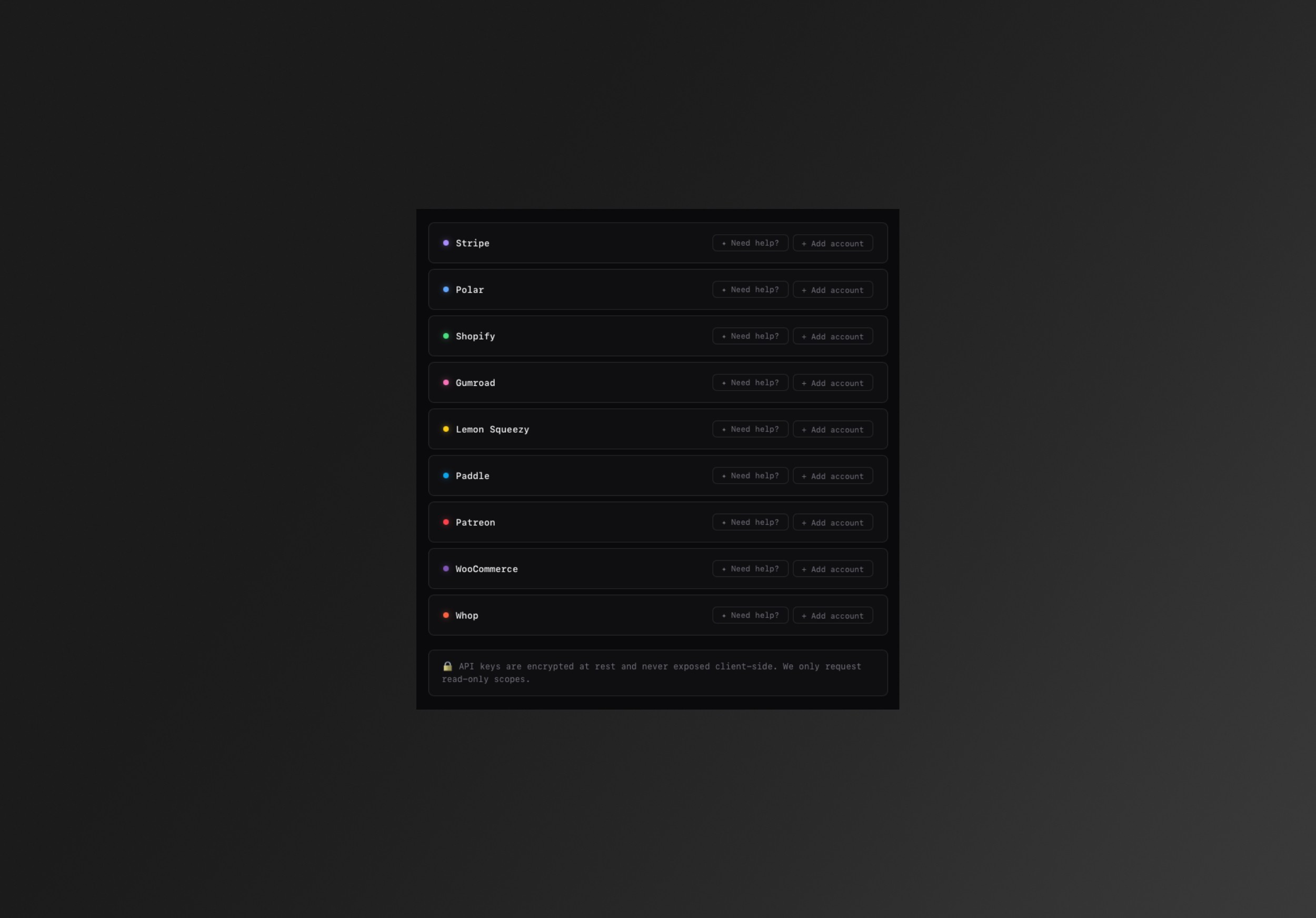
One dashboard built on three rules: read-only by default, net before gross, and a human always decides. 14 providers connect with read access, and everything is shown in the user's currency. Manual entries and an AI-assisted receipt import cover what has no API. Invoicing, scheduled reports and alerts live in the same place. The new layer is an API and an MCP server: users connect Claude or ChatGPT in one click and ask "which provider is growing the fastest?" or "draft an invoice for $250". The AI can only create drafts, never delete, send or pay anything, and access can be revoked at any time. Security and privacy are part of the product: encrypted provider credentials, optional two-factor authentication, no trackers, and data export and deletion built in.
Design
The interface follows a validated design system: color tokens, typography and interaction patterns defined once and applied across the app, the marketing site and the launch video, so the product feels consistent from the landing page to the dashboard. The goal was a calm, legible interface for people who open it to check a number, not to learn a tool.
Security, privacy and compliance
Provider credentials are encrypted with AES-256-GCM. API keys and tokens are stored only as hashes. Passwordless sign-in with one-time codes, optional two-factor authentication, sessions that can be revoked everywhere, a strict content security policy and rate limiting.
Business model
A free Starter plan (Stripe and PayPal, one year of history) and a Pro plan for every provider, invoicing, the API and the AI connector, billed quarterly or yearly. A Team plan is designed and held back until there is demand.

Credits
Featured On
Onepagelove, Landingfolio, ProductHunt
Collaboration
Moshymercy, Lazy Company
Previous Project
Lazy Company
Lazy Company builds AI-powered lead generation systems, but explaining that process clearly is harder than it sounds in a space saturated with vague promises and interchangeable jargon. They needed a landing page that could walk a skeptical, sophisticated buyer through exactly how the process worked — without leaning on the buzzwords that make most AI companies sound identical.
Visit