Framer vs Webflow in 2026 — an honest take from someone who's built on both
By
Moshymercy
10 Min Read

Most Framer vs Webflow comparisons are written by people who have a preference and are building a case for it.
This one is written by someone who has built 33 production templates on Webflow and a growing catalogue on Framer. I've shipped real projects on both platforms, sold templates on both marketplaces, and watched both tools evolve over the past few years.
Here's what's actually true in 2026.
The context has shifted
When Webflow was the dominant no-code web tool, the comparison was almost hypothetical. Framer was primarily a prototyping tool — useful for interactive mockups, not production websites.
That's no longer the case. Framer has become a legitimate production platform. The hosting is reliable, the CMS handles real content needs, and the template marketplace has matured to the point where quality-reviewed templates are the norm rather than the exception. The question is now genuinely open.
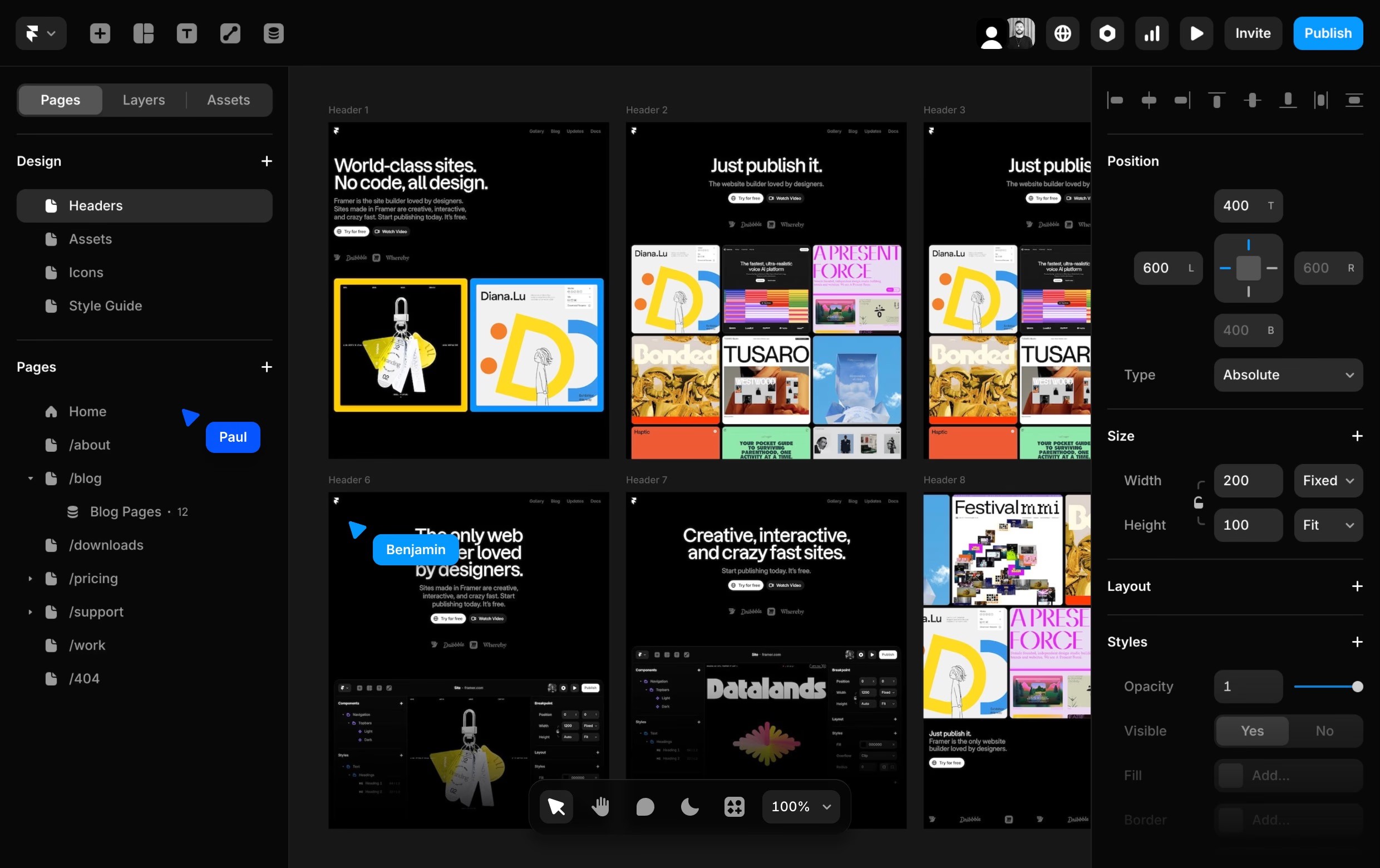
Where Framer wins in 2026
Speed from idea to live. Framer is faster. Not marginally — significantly. A Framer project can go from template to published in a day if the content is ready. The visual editor is more intuitive for designers, the publishing pipeline is frictionless, and the hosting setup takes minutes. For agencies and solo builders who need to move fast, this matters more than any feature comparison.
Animation and interaction quality. Framer's animation system is the best in its class. Scroll-driven animations, component-level transitions, parallax — all achievable without code, and the output is indistinguishable from custom development at the complexity level most agency sites need. Building equivalent animations in Webflow takes longer and requires more technical knowledge.
Design ceiling. The sites you can build in Framer look better on average than what Webflow produces at equivalent skill level and time investment. Framer's defaults are higher. The aesthetic floor is higher. The gap narrows as Webflow skill increases — but the speed at which Framer reaches a high-quality output is a genuine advantage.
Template quality control. The Framer marketplace has a quality review process. Templates that make it through — including those at Sidebay Supply — have been held to a standard that Webflow's marketplace historically hasn't enforced. What this means practically: a Framer marketplace template is more likely to be production-ready out of the box.
Component architecture. Framer's component system — particularly with variants and overrides — is cleaner and more designer-friendly than Webflow's symbols and classes model. For anyone who thinks in design systems rather than code structures, Framer's model maps more naturally to how design actually works.

Where Webflow wins in 2026
CMS complexity. If you need a multi-collection CMS with complex relational data — a blog with tags, authors, and categories; a directory with filtering; a job board with multiple content types — Webflow's CMS is more mature. Framer's CMS handles straightforward content well, but Webflow's relational model is more powerful for complex content architectures.
E-commerce. Webflow Commerce is a real product. Framer doesn't have a comparable offering. If selling physical or digital products with cart, checkout, and order management is a core requirement — Webflow wins this clearly.
Client content editing. Webflow's Editor mode is genuinely good for handing a site to a non-technical client. The in-page editing experience is more polished and more intuitive for people who have never used a CMS. Framer's CMS editor is functional but less refined.
Enterprise and team workflows. For larger teams with multiple contributors, staged publishing, and complex permission structures — Webflow's infrastructure is more mature. Framer is still primarily optimized for solo builders and small teams.
Ecosystem depth. Webflow has been around longer. The ecosystem of certified partners, integrations, third-party tools, and community resources is larger. If you're building something that requires deep integration with external systems, Webflow's ecosystem gives you more to work with.
The honest answer for 2026
For creative agencies, studios, and founders building marketing sites, landing pages, and portfolios: Framer is the better choice.
The speed advantage is real. The animation quality ceiling is higher. The template quality is more consistent. And for the projects that make up the majority of agency work — multi-page marketing sites that need to look great and ship fast — Framer handles it better.
For complex CMS-driven projects, e-commerce, or anything requiring serious client content management — Webflow is still the more capable platform.
I built 33 templates on Webflow. They're still good. They're still for sale. But the catalogue I'm actively developing in 2026 is on Framer — because that's where the tool's strengths align with what most of my buyers actually need.
About